Your Post-Storm Checklist: How to Spot Hidden Roof Damage
Here in Central Florida, we're no strangers to wild weather. From the daily afternoon showers to the serious threats during hurricane season, our roofs are constantly put to the test. After a storm passes, it’s natural to feel a sense of relief. But the calm after the storm is the perfect time to check for damage, because the most significant issues aren't always the most obvious. A few missing shingles are easy to spot, but subtle, hidden damage can lead to slow leaks and major problems down the road. At Blue Cedar Roofing & Construction, we believe an informed homeowner is an empowered one. This guide will walk you through how to safely assess your roof for the signs of storm damage that often go unnoticed.
Step 1: The Safe Ground-Level Inspection
Your safety is the top priority. Never get on a wet roof or climb a ladder in unsafe conditions. The good news is you can spot many potential red flags with your feet planted firmly on the ground. Grab a pair of binoculars if you have them and walk the perimeter of your home, looking for:
- Granules in Your Downspouts: Check the areas where your gutters drain. A large accumulation of asphalt granules (they look like coarse black sand) is a sign that the storm's wind and rain have worn away the protective top layer of your shingles, shortening their lifespan.
- Dented Gutters and Vents: Hail can leave its mark on more than just your shingles. Dents or dings on metal gutters, downspouts, flashing, or roof vents are a strong indicator that your roof likely sustained hail impacts as well.
- Debris on the Roof: While leaves and small twigs are normal, larger branches or significant debris could have caused scrapes, gouges, or punctures that compromise the roof's integrity.
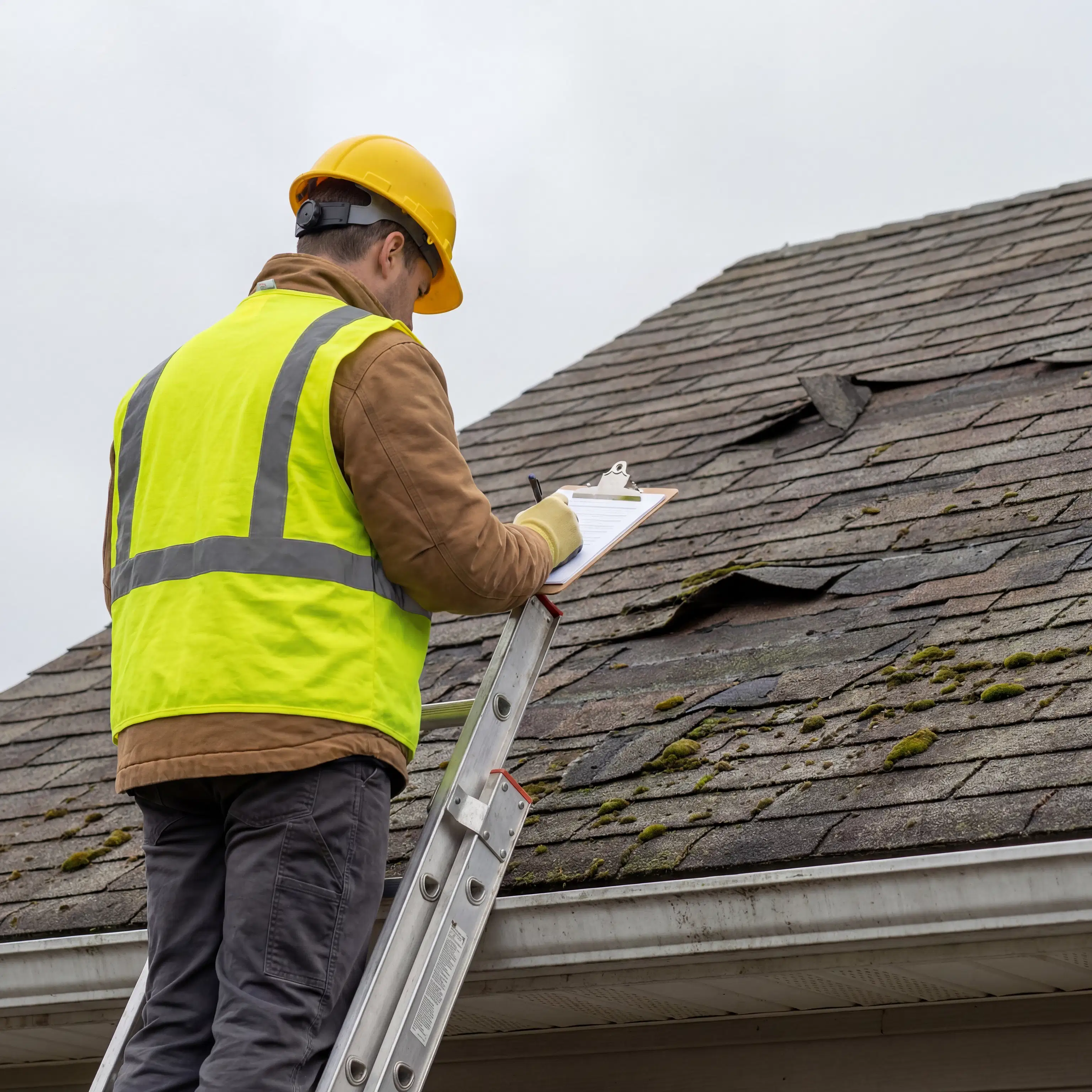
- Visible Shingle Issues: Look for shingles that are obviously missing, cracked, or curled. Pay close attention to the edges and corners of the roof, as these areas are particularly vulnerable to wind uplift.
Step 2: Identifying Subtle Signs of Wind and Hail Damage
This is where damage becomes harder to spot. Wind and hail can cause problems that aren't immediately obvious but can severely compromise your roof's ability to protect your home.
Wind Lift Damage: During a high-wind event, shingles can be lifted without being completely torn off. This upward force breaks the adhesive seal that holds the shingle down. Once this seal is broken, the shingle is vulnerable to being ripped off in the next storm and allows water to be driven underneath it. From the ground, you might see a horizontal crease where the shingle was bent back, or it may just look slightly out of place.
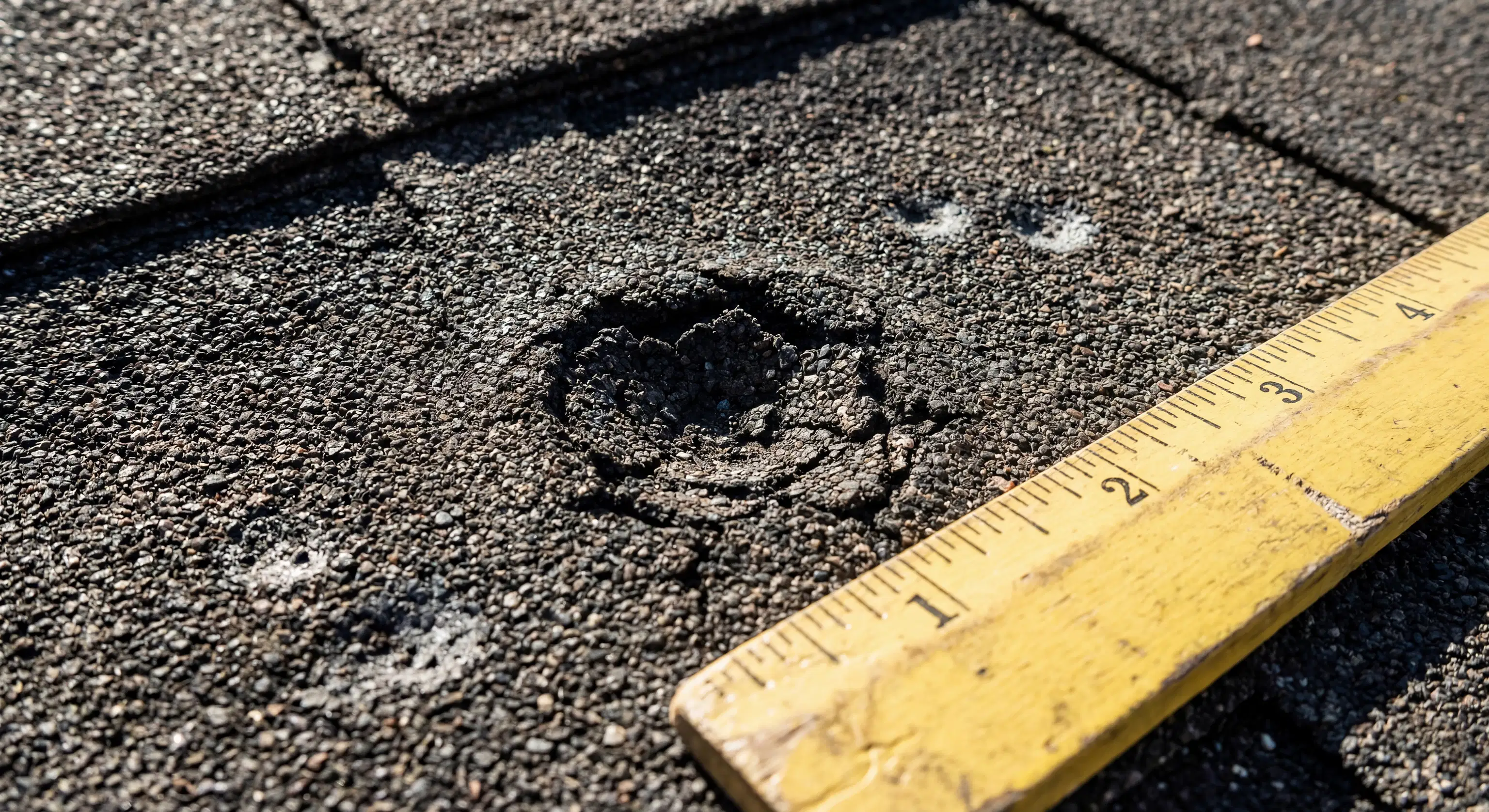
Hail Bruises: Hail doesn't always crack a shingle. Often, it creates a “bruise”—a small, dark spot where the impact has knocked the protective granules loose. These spots can be very difficult to see, but they expose the underlying asphalt mat to UV rays, which causes it to deteriorate rapidly. On an asphalt shingle, a hail hit might feel soft to the touch, like a bruise on a piece of fruit.
Step 3: Look for Trouble from the Inside Out
Sometimes, the first signs of a roof problem appear inside your home. After a storm, it’s wise to check your attic and ceilings for evidence of a leak.
Head up to your attic with a flashlight and look for:
- Wet Insulation: Check the insulation on the attic floor for damp or compressed spots.
- Water Stains: Look for dark stains, streaks, or discoloration on the underside of the roof decking or on the wooden rafters.
- Visible Daylight: On a bright day, turn off your flashlight. If you can see any pinpricks of light coming through the roof, you have a direct path for water to enter.
Inside your home, scan the ceilings and walls, especially in rooms on the top floor. Look for any new water stains, discoloration, or bubbling/peeling paint. A small, faint spot can be the first sign of a slow leak that needs immediate attention before it becomes a major roof repair project.
Why a Professional Inspection is Your Best Next Step
While a personal inspection is a great first step, it can’t replace the trained eye of an experienced roofing professional. We can safely navigate your roof to identify the subtle signs of damage—like broken sealant from wind lift or hail bruises—that are nearly impossible to see from the ground. A thorough inspection provides the documentation you need for a successful insurance claim and gives you a clear understanding of your roof's condition.
Ignoring hidden damage can lead to costly structural issues and interior water damage over time. A professional assessment ensures that small problems are caught before they escalate, protecting your home and your peace of mind. If you suspect any issues, especially after a significant storm, it's crucial to act quickly. Timely intervention can be the difference between a simple repair and a more complex situation requiring emergency roofing services.
Don't Wait for a Drip—Get Peace of Mind
Your roof is your home's first line of defense against Florida's unpredictable weather. After a storm, don't leave its integrity to chance. By performing a safe ground-level check and knowing the subtle signs of hidden damage, you can take proactive steps to protect your investment.
If you've noticed any of the warning signs mentioned above or simply want the assurance that your roof is secure, contact the team at Blue Cedar Roofing & Construction. We provide honest, thorough roof inspections for homeowners throughout Central Florida. Let us put our expertise to work for you. Schedule your free inspection today and ensure your home is ready for whatever the next season brings.